Climate-Smart School Meal Programs
by Melissa Pradhan, Survey Associate: Asia, The Pacific, & The Middle East
The IPCC Reports have repeatedly called for alarms to reduce greenhouse gas (GHG) emissions in order to limit the increase of global average temperature to 2ºC, if not 1.5ºC. World class evidence and studies have indicated that failing to meet this target will result in catastrophic events with the potential to cause adverse cascading impacts on human life and the economy.
Emissions sourced from the Agriculture, Forest and Other Land Use sector alone have been noted to be just under a quarter of the total anthropogenic GHG emissions making up to approximately 10–12 Gigatonne of CO2eq per year (Smith, 2014). Mitigating GHG emissions from this sector, therefore, has the potential to deliver large-scale emission reduction.
In the 2020 academic year, 330.3 million students received school meal programs globally (GCNF, 2022). In the United States alone, the National School Lunch Program (NSLP) reaches millions of children every day. Nutrition Standards for the US NSLP shapes a USD 14 billion market and food service directors are obligated to adhere to the recommended nutrition standards. However, it was found that the current menus are not aligned with the latest nutritional science, and in addition have huge impacts on the environment. Researchers found that the NSLP menus incorporate the most carbon-intensive foods compared to the diet recommendations from the EAT-Lancet Commission’s healthy reference diet (Poole, 2020).
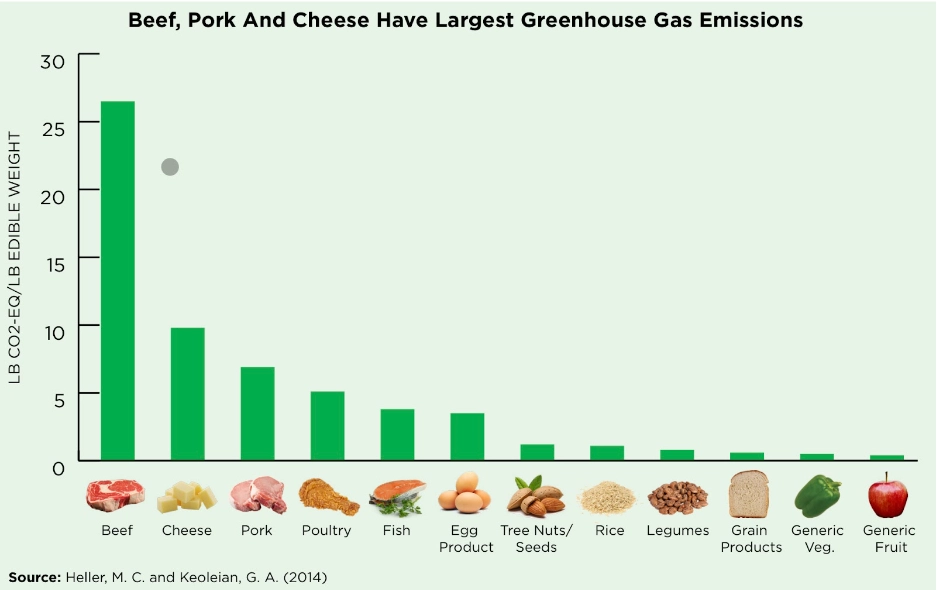
A study by Stern identified that the use of animal products in school lunches, mainly beef and dairy, was primarily the major driver of emissions (Stern, 2022). This is because beef hot dogs generate seven times more carbon than tofu and veggie stir-fry rice, for example. If all School districts opted for a reduced animal food menu, the US alone could minimize their carbon footprint by 700 million kg CO2eq that is equivalent to installing 99,000 residential solar panels or eliminating 150,000 cars from the roads for a year (Hamerschlag, 2017). In addition, reducing institutional purchase of factory-farmed meat can also strengthen local food systems.
Increasing evidence suggests that school meal programs can be made both healthier and climate-friendly at a low cost without having to compromise on meeting the recommended nutrition standards (Hamerschlag, 2017). As school districts have the liberty to design their own menu to meet the federal nutrition requirements, they hold the potential to influence dietary behaviors and the country’s agricultural landscape for years to come.